
Meeting emission targets is policy, not science, professor tells youth climate trial
VANCOUVER — A professor has told Canada’s first youth-led climate trial that while science can inform the emission reductions needed to meet targets, how that is achieved is a matter of policy.
Climate science professor Kirsten Zickfeld from Simon Fraser University has told the trial in federal court in Vancouver that models suggest Canada has “exceeded its fair share” of its “carbon budget.”
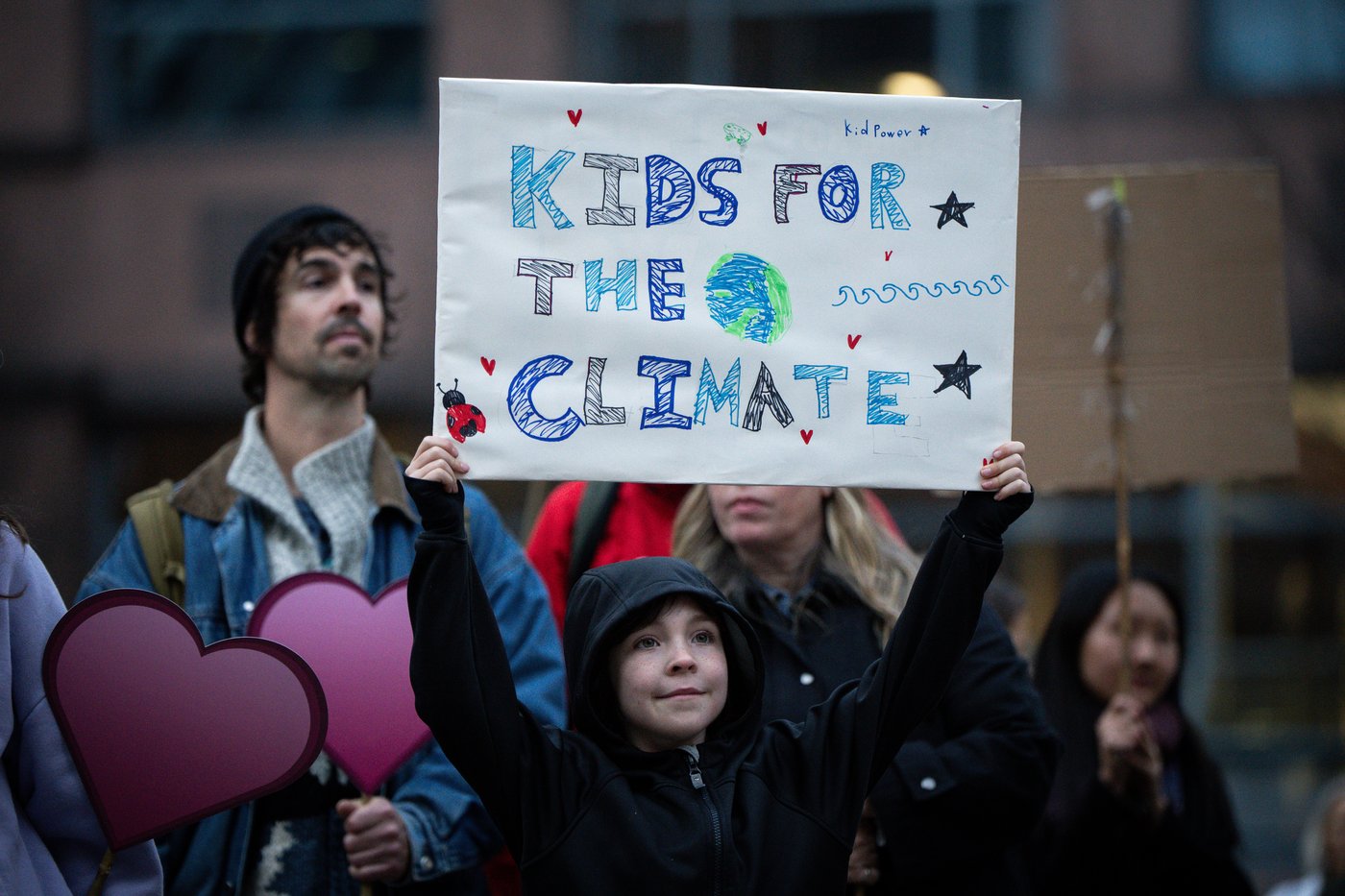
The case before the court was brought by 15 youth, who are arguing that federal legislation violates their constitutional rights by continuing the trajectory of greenhouse gas emissions.
Zickfeld explained the concept of a carbon budget, the maximum amount of carbon dioxide emissions that can be released while keeping global warming “around 1.5 degrees” and “well below” two degrees Celsius, targets set in the binding 2015 Paris Agreement that includes Canada.
She says that to stabilize global temperatures, there’s a need for “net zero” emissions, in which man-made emissions and man-made removals of carbon dioxide from the atmosphere even each other out.
Youth plaintiffs from seven provinces and two territories are expected to testify how they have suffered “specific harms connected directly to the government’s conduct” as they seek to hold Canada legally accountable.
Zickfeld told the court that carbon budgets around the world are calculated based on principles of “equity, capability and responsibility” and the calculations suggest “Canada’s carbon budget is essentially zero or negative,” indicating that it has already surpassed its fair share of emissions.
Canada, she said, was among the 10 largest emitters of greenhouse gases annually and historically.
“To stabilize global average temperature, global carbon dioxide emissions need to be reduced to at least net zero and the emission of other greenhouse gasses such as methane and nitrous oxide need to be strongly reduced,” she said.
But Zickfeld said under cross-examination that while science helped determine the targets, it “doesn’t provide the path” to meeting them.
The trial comes about seven years after the case was first filed in 2019.
It is expected to continue into late November, with closing arguments scheduled for February.
This report by The Canadian Press was first published Oct. 27, 2026.
Brieanna Charlebois, The Canadian Press
Comments